

Smart hours are replacing billable hours in many law firms today. The industry is changing rapidly, and the time to clients is no longer the primary factor in how value is judged. However, people are more interested these days in getting clear results, quicker answers, and work performed with better tools. This is why the concept of smart hours vs billable hours is becoming so popular. A recent study found that 61% of lawyers are now using AI in their daily work, demonstrating how the future of law in the age of AI is already here. Lawyers who learn to work smarter, not longer, will be the ones who stay ahead.
Why AI Is Pushing Law Firms Beyond the Billable Hour
AI for lawyers is changing the way work gets done. It’s one of the biggest reasons that the legal industry is shifting away from the old billable hour model. Modern technologies such as Harvey, Casetext, and Kira Systems allow lawyers to complete research, review documents, and draft papers in minutes rather than hours, reducing routine tasks to a fraction of the time they took before. A 2025 survey revealed that 79% of law firms now use AI tools in their workflows, indicating that AI adoption across the profession is widespread.
Due to these tools, lawyers no longer have to bill for the time spent doing these repetitive tasks. Instead, they can focus on providing real value insight, strategy, and thoughtful counsel. When law firms are open to automation in this legal industry, smart hours yield higher results than billable hours. The legal world is moving into a new era where what matters is efficiency and impact, not how many hours were logged.
How Top Law Firms Use Smart Hours Today
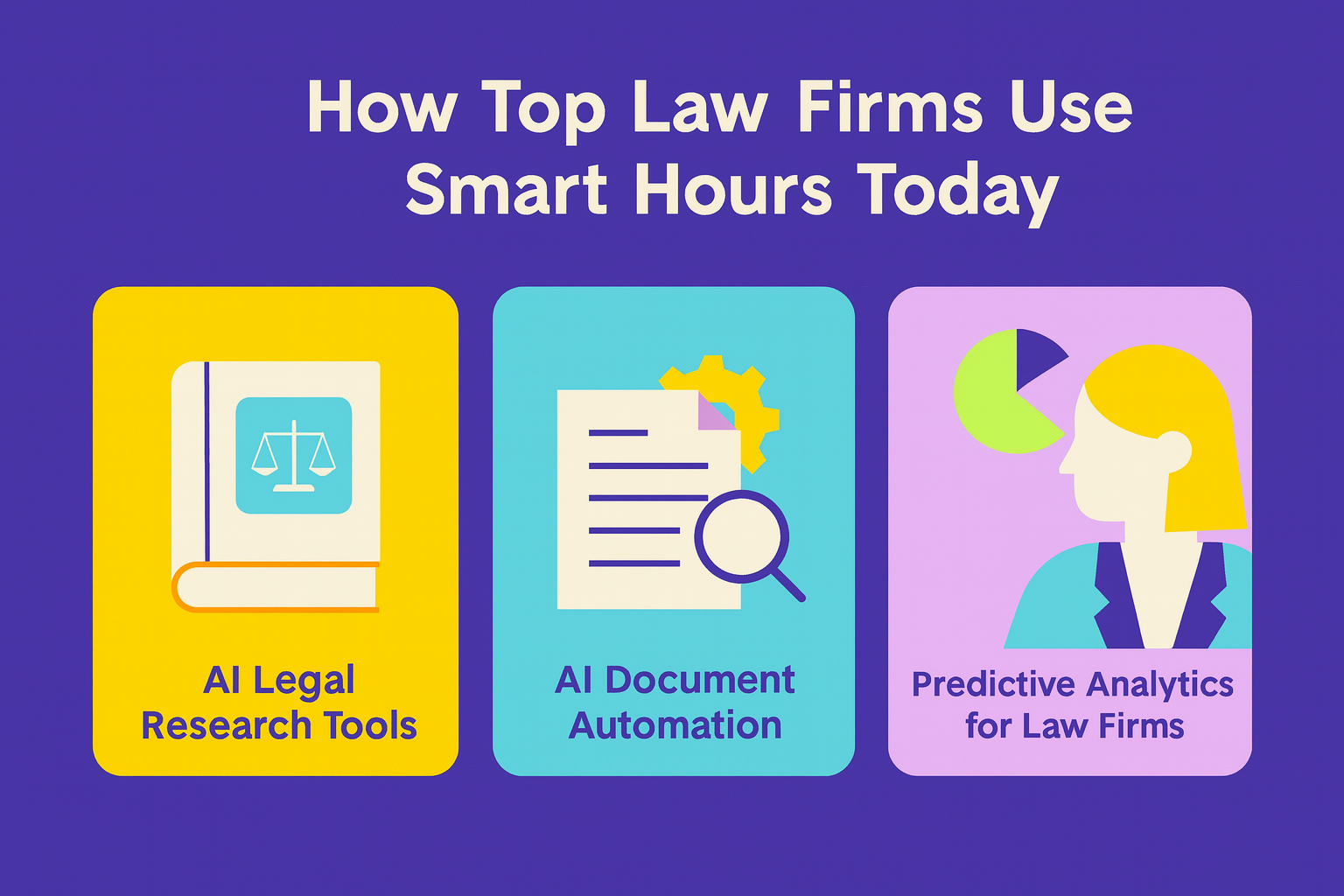
Top firms are already using legal AI tools to reduce routine work and get to work on high-value tasks. Smart hours are derived from allowing technology to do the heavy lifting so lawyers can spend more of their time on strategy, judgment, and client work. Here is what firms are doing right now.
AI Legal Research Tools
AI legal research tools help lawyers track down cases, summaries, and statutes in minutes. Platforms such as Harvey and Casetext are able to search large databases within the blink of an eye and get relevant data back in hours. This helps the lawyers to utilise their time getting to know the issue and not digging for it.
AI Document Automation
AI document automation has helped firms to create, analyze, and compare documents quickly and accurately. Tools such as Kira Systems identify clauses, risks, and errors in a short amount of time. According to a 2025 Federal Bar Association report, law firms that use AI have been able to shave off 30-50% of their routine legal tasks, and lawyers are back at work on more meaningful legal tasks.
Predictive Analytics in Law Firms
Predictive analytics for law firms assists lawyers in predicting outcomes, weighing risk, and developing a strategy based on patterns in data. Instead of guessing, lawyers can make informed decisions based on what they glean from past decisions and trends.
Together, these tools reveal how smart hours replace wasted hours. It allows lawyers to work faster and better and with far more impact.
How AI Is Changing Your Visibility — Not Just Your Workflow
AI is not only changing the way lawyers work, but it’s also changing how they are viewed. Today, law firm digital visibility is as important as good legal skills. Clients go online before they reach out, and they expect to find the following: Clear profiles, helpful insights, and signs that you are active in your field. This is where AI-assisted content for lawyers makes a major difference.
AI tools are now aiding lawyers to create simple posts, summarize legal news, and share insights without spending hours writing. A 2025 AttorneyAtWork report revealed that lawyers who use AI to assist in content creation were able to be more consistent in their postings by 47%, which also meant they were more engaged online. This demonstrates the feature of AI for legal marketing to increase visibility without providing extra workload.
AI is also useful for lawyers to understand what clients are interested in by identifying trends and frequently asked questions. When you’re discussing the right topics, people trust you faster. This is why the visibility of AI and lawyers go hand in hand now. With smart systems doing the heavy lifting, lawyers will be able to remain visible, helpful, and top of mind – even on busy weeks.
What Clients Now Expect in the AI Era
Clients of today expect far more than long reports or long hours. They want to get clear answers, fast communication, and work with fewer mistakes. This is the greatest change in AI and client expectations. People no longer judge a lawyer by how long something takes; they judge by how confident and quick the lawyer is to solve the problem. That’s why so many firms are moving toward value-based legal services rather than billing by the hour.
AI now assists lawyers in going through documents, identifying risks, and drafting documents with greater accuracy. A 2025 legal tech survey demonstrated that 72% of clients report that they prefer to work with firms using technology to give quicker and clearer results, as they believe it makes risk smaller and trust bigger. This is exactly what modern law practice is turning out to be: a combination of human judgment and smart tools.
As AI takes care of the routine steps, lawyers will be able to focus on strategy, communication, and helping clients make difficult decisions. In the age of AI, clients don’t want time sheets; they want confidence. They want outcomes, not hours. And the firms that deliver clarity, speed, and certainty are going to be the ones that clients go for each time.
Which Practice Areas Benefit the Most
Law firm AI adoption isn’t happening evenly across the industry. According to AffiniPay’s 2025 Legal Industry Report, the practice areas that are seeing the greatest return in the use of AI tools are corporate, transactional, and compliance teams. These groups are heavily dependent on contract review, due diligence, and document drafting – all areas where AI-driven legal workflows reduce hours of routine work and deliver faster and cleaner results.
On the other hand, litigation, criminal law, and family law are undergoing a slower transition. These fields involve more information strategy in the court of law and human judgement, empathy, and nuanced decisions, skills AI cannot replace. Here, the legal tech 2025 is supporting background work, research, and case preparation rather than being at the forefront of the process.
Still, each practice area has the same client expectations: quicker answers, more communication, and fewer errors. Even the practices that will be affected by automation the least now rely on AI to enhance accuracy, handle files, or assist in preparing information.
The difference stated is the difference in the pace of adoption, not the need. No matter the field, AI-driven legal workflows are becoming a part of what clients understand as par for the course, not additional. And the firms that adopt the tools early on will create a stronger base for long-term efficiency and trust.
The Human Skills AI Cannot Replace
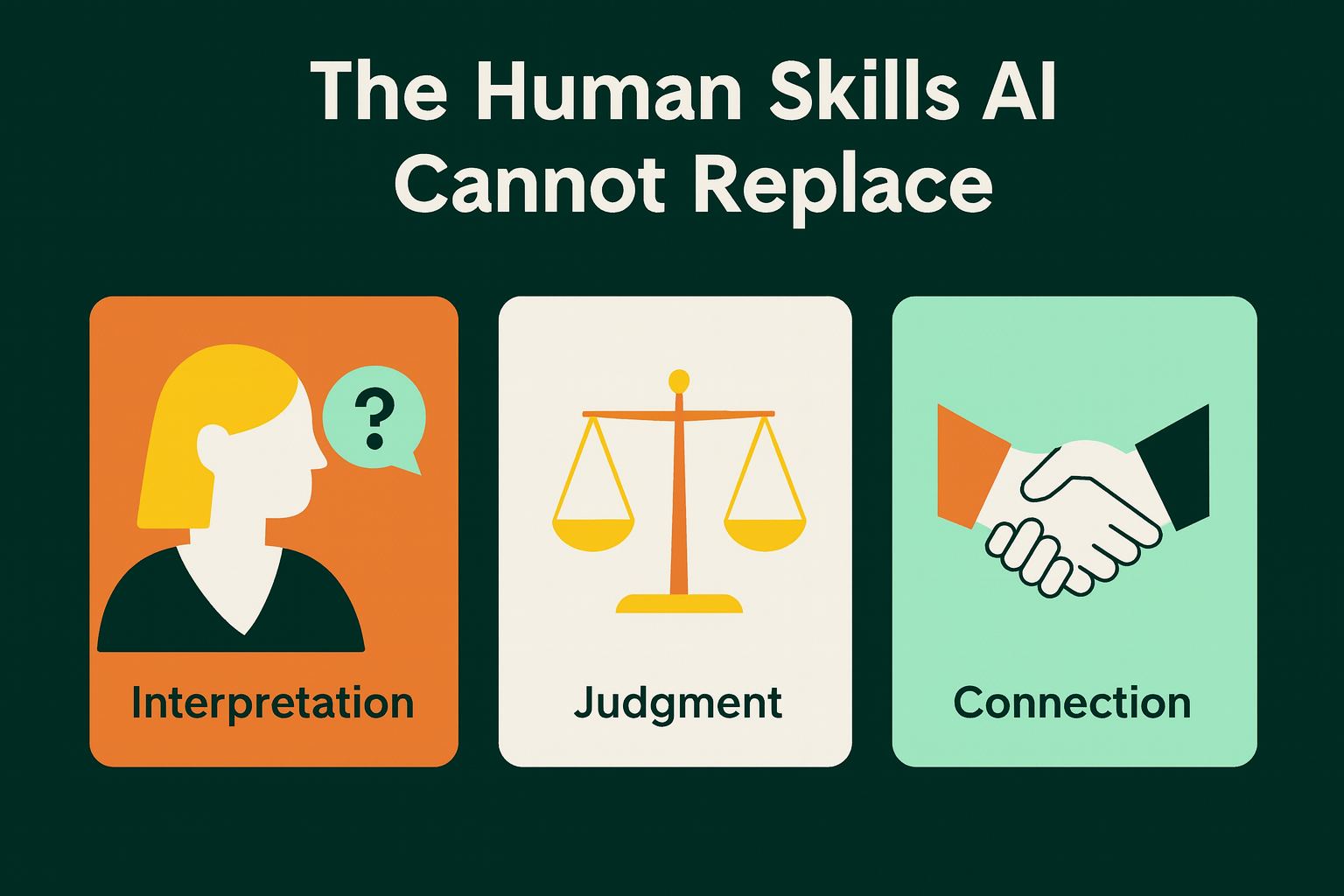
Even in the days of high-level automation technology, the most powerful competitive advantage in modern law practice still lies in inherently human abilities. AI can make the routine tasks take less time. At the same time, it can’t replace the qualities that make the client trust the lawyer, follow him, and be loyal to him.
A. Interpretation
AI can gather information, summarize laws, and highlight patterns. It cannot explain what any of it means in a real-world situation. Clients depend on lawyers for the ability to translate complexity into clarity, for lawyers to take risks in context. Moreover, lawyers need to guide clients through decisions with real consequences. This is where human interpretation becomes an integral advantage in AI-powered reputation building.
B. Judgment
No algorithm knows nuance, emotion, or human behavior. Good judgment requires life experience, ethical reasoning, and being able to weigh outcomes beyond data. This is why an attorney’s perspective is still needed by the clients, not just answers that a tool types.
C. Connection
Trust is an experience that takes place between humans. Even with the prevalence of automation everywhere, clients select lawyers with whom they feel a connection. Lawyers who use AI for business development are freeing up time to have conversations, be clear, and lead the development of better relationships than ever before.
AI is what augments skill, but cannot be instead of character, trust, or human intelligence.
Why Smart Hours, Not Billable Hours, Is The Future Of Law
The future of law in an age of AI is already here. It’s clear that smart hours are beating the billable hours. Clients no longer measure value in how long something takes. Rather, they measure value in the speed, clarity, and confidence you bring. With AI doing the heavy lifting, law firm workflow automation frees up lawyer time for strategy, risk assessment, communication, and business development.
This shift renders legal services more predictable, more efficient, and more aligned to what clients actually want: a fast answer, fewer mistakes, and clear results. Smart hours help lawyers spend less time creating documents. It allows them more time on meaningful guidance, which is the part of the job that really matters.
In this new model, lawyers gain more trust, visibility, and high-value work.
Conclusion
The firms that are going to grow in the coming years aren’t going to be the ones fighting technology. Rather, it’s going to be the companies and organizations that use AI to improve visibility, trust, and provide faster, better results. AI doesn’t eliminate the human aspect of the law; it elevates it, freeing lawyers to focus on strategy, communications, and client relations.
If you want to build a practice that’s seen, trusted, and ready for the future, now’s the time to shift from hours to impact. When your systems are smarter, your value is impossible to miss.
If you would like assistance with developing a clean, simple, and AI-supported visibility and workflow strategy, book a short strategy call. We’re going to chart a course through AI to position yourself as the lawyer clients seek out, not just the lawyer clients are referred from.